

Horizon Leadership Academy


At Horizon Leadership Academy, Physical Education is more than exercise or free play. Our TEKS-aligned Physical Education program is designed to help students become confident movers, responsible teammates, thoughtful competitors, and lifelong participants in physical activity.
From Pre-K through High School, students progress through developmentally appropriate experiences in movement, fitness, cooperative learning, sport skills, leadership, strategy, and personal wellness. Lessons combine structured instruction, games-based learning, student choice, teamwork, problem solving, and reflection so that students are learning while they move.
Our goal is simple: every student should leave PE healthier, more confident, more knowledgeable, and better prepared to make physical activity part of life.

Our youngest students learn through play. Classes focus on body awareness, locomotor and manipulative skills, balance, coordination, spatial awareness, following directions, cooperation, and safe movement. Students run, jump, balance, kick, dance, and explore movement in an environment where every child can participate and succeed.

Elementary students build strong foundations in fundamental movement skills while beginning to understand fitness, teamwork, and sport concepts. Students participate in cooperative challenges, invasion games, net and wall games, creative movement, basketball, track and field, and age-appropriate fitness activities. Grades 4–5 are also introduced to FitnessGram concepts and personal fitness awareness.

Middle School PE challenges students to take greater ownership of their fitness and athletic development. Students learn to apply movement skills in game situations, understand rules and strategy, use the FITT principle, interpret fitness information, set measurable goals, and develop leadership through roles such as captain, official, coach, and activity leader.

High School PE emphasizes lifetime fitness, independence, leadership, and personal responsibility. Students use FITT principles and FitnessGram data, participate in team and lifetime sports, develop tactical decision-making, experience coaching and officiating roles, and connect physical activity with nutrition, sleep, recovery, and overall wellness. The long-term objective is for students to leave school with the skills and knowledge needed to remain physically active throughout adulthood.
The HLA Physical Education curriculum is organized into six major learning units:
Students develop movement foundations, fitness knowledge, heart-rate awareness, FitnessGram skills, FITT concepts, personal goals, and healthy habits.
Team challenges develop communication, problem solving, trust, leadership, inclusion, and conflict resolution.
Students learn passing, movement, spacing, attacking, defending, tactical awareness, teamwork, and decision-making through soccer and other invasion-style games.
Students develop striking, serving, passing, rallying, positioning, and court awareness through volleyball, badminton, pickleball, and modified net games.
Basketball, rhythm, fitness dance, jump rope, and creative movement allow students to combine coordination, skill, fitness, and personal expression.
Students experience sprinting, distance running, relays, jumping and throwing activities, personal-record challenges, and fitness reassessment.
These six units form the core of the annual curriculum from fall through spring.
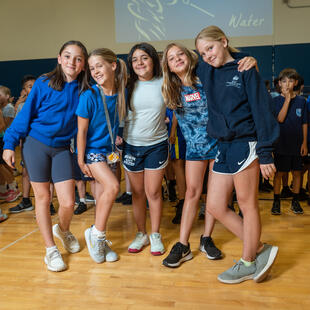
We believe students learn best when they are actively solving problems rather than simply waiting in lines to perform drills.
PE lessons regularly use small-sided games, team challenges, relay activities, movement missions, strategy games, fitness challenges, and modified sports. Students are asked to communicate, make decisions, develop strategies, lead teammates, solve movement problems, and reflect on their performance.
Winning can be exciting, but students also learn that integrity, effort, improvement, teamwork, and sportsmanship matter more than the final score.

Fitness education is an important part of our program, but students are not compared simply by athletic ability.
Students learn about cardiovascular endurance, muscular strength, flexibility, agility, recovery, heart rate, FITT principles, healthy habits, and personal goal setting. As students grow older, they take increasing responsibility for interpreting fitness data and designing goals and activity plans.
FitnessGram is incorporated developmentally, with middle and high school students using assessment information to better understand and improve their own fitness. The annual curriculum includes FitnessGram assessment, goal setting, and later reassessment and personal-record opportunities.
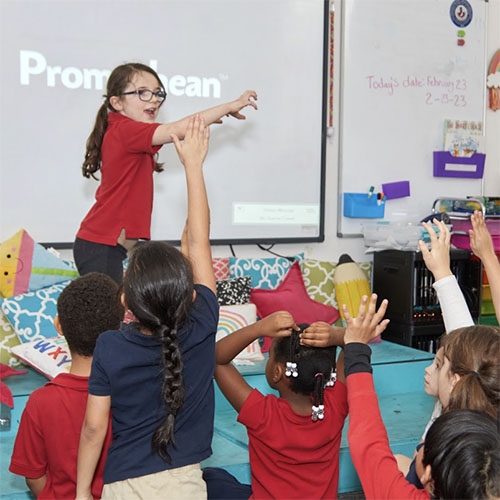
Physical Education provides daily opportunities to practice Horizon Leadership Academy's IRISE values:
Integrity through fair play and honest competition
Responsibility through preparation, effort, and care for equipment
Innovation through creativity, strategy, and trying new solutions
Service through helping teammates and including others
Empathy through encouragement, respect, and celebrating the effort of others
These values are intentionally embedded in PE from the earliest grades.
Older students are also given opportunities to serve as captains, coaches, officials, activity leaders, and team problem solvers, helping them develop communication, accountability, and leadership skills.
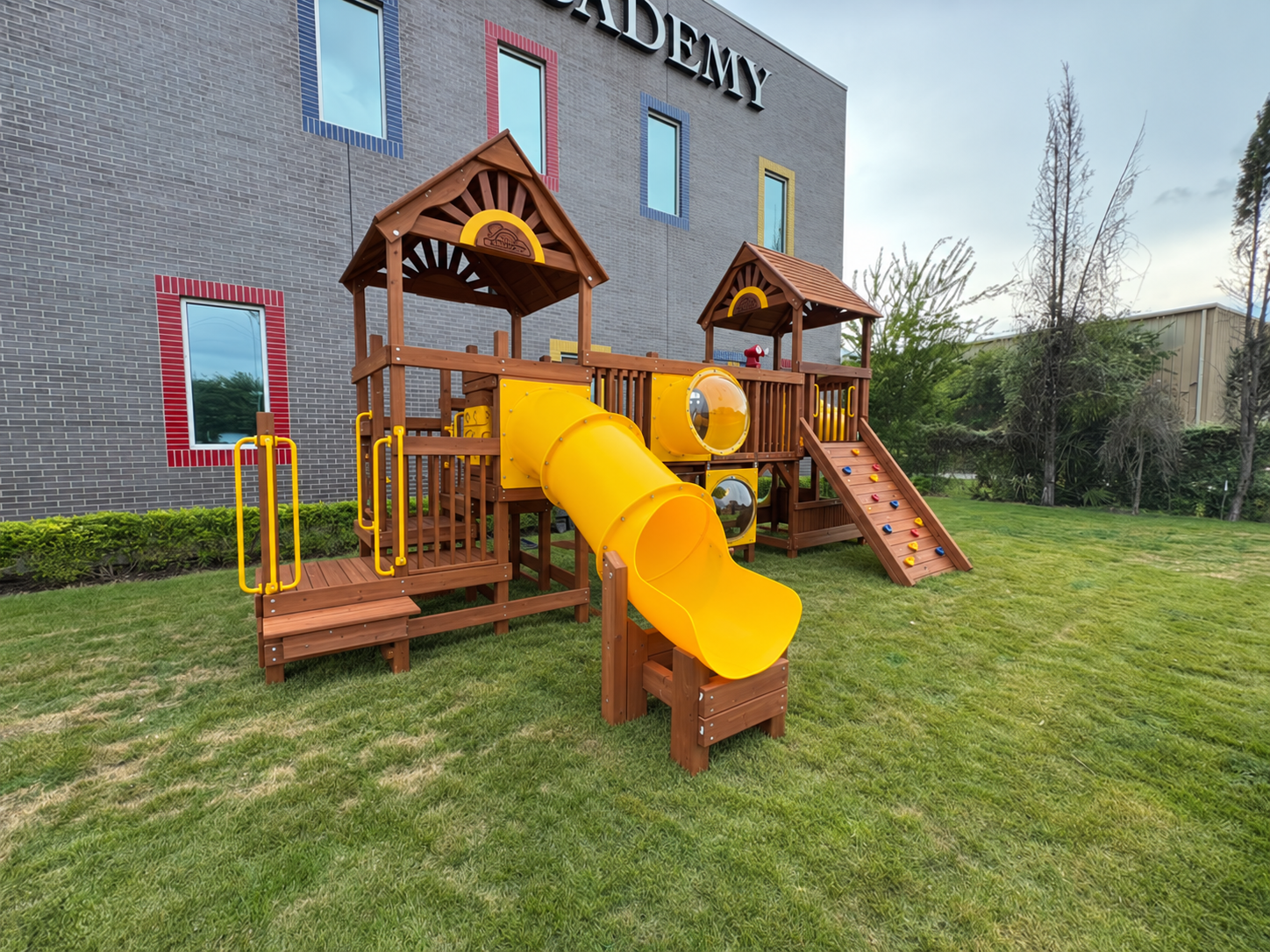
Our curriculum connects Physical Education with other areas of learning.
Students may explore cardiovascular science and fitness data through Science and Math, leadership and citizenship through Social Studies and SEL, global cultures through Soccer and Geography, force and trajectory through Physics, rhythm and cultural expression through Music and Arts, and Olympic history and human performance through Science and History.
This interdisciplinary approach helps students understand that physical education connects to the world far beyond the gym.

Students are not graded simply on who is the fastest, strongest, or most naturally athletic.
Assessment considers areas such as:
Participation and Effort
Skill Development and Growth
Sportsmanship and Leadership
Fitness and Physical Education Knowledge
Preparation, Responsibility, and Safe Participation
For example, the elementary syllabus emphasizes effort, growth, sportsmanship, skill development, and fitness knowledge, while the middle-school model expands this toward leadership and ownership of learning.
The goal is for every student to have a meaningful path toward success, regardless of previous athletic experience.
By the end of their experience at Horizon Leadership Academy, students should be able to do more than play several sports.
They should understand how and why their bodies move, know how to improve their personal fitness, communicate and collaborate with others, compete with integrity, respond positively to challenges, make healthy choices, and identify forms of physical activity they can continue throughout life.
We want students not only to participate in PE today, but to develop the confidence, knowledge, habits, and character to remain active for life.


